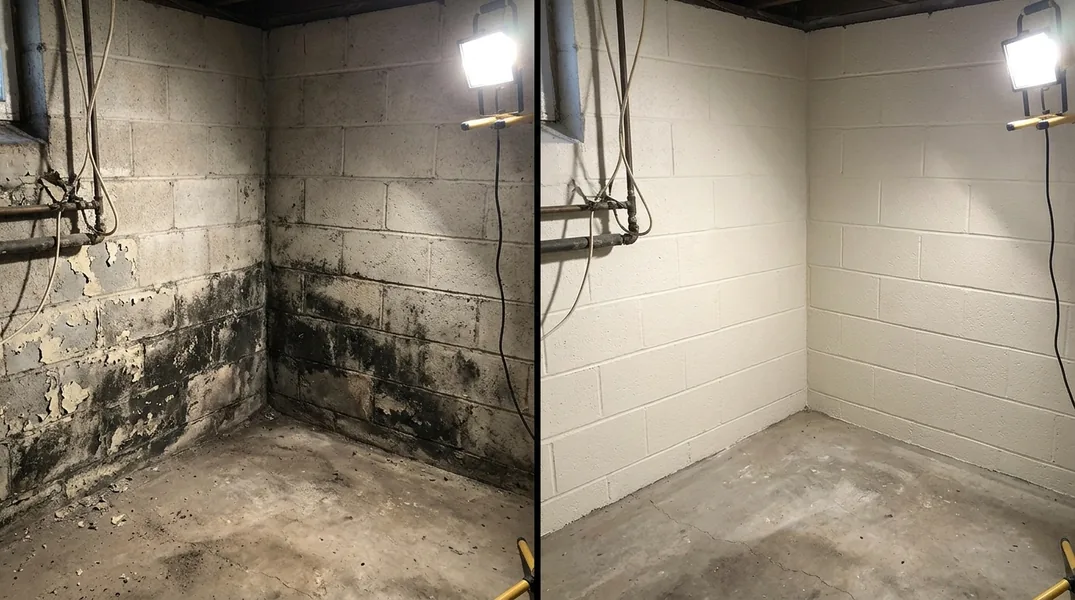
Why Bowling Green Basements Face Unique Water Challenges
If you live in Bowling Green, you already know that the ground beneath your home is not like the soil in most American cities. This region sits on karst geology, a landscape shaped by soluble limestone that dissolves over time to create sinkholes, underground streams, and caverns. That geology has a direct impact on how water behaves around your foundation. Instead of moving predictably through clay or sand, groundwater here can travel through hidden channels and emerge against your basement walls with little warning.
That is why the interior vs exterior waterproofing debate matters more here than in other markets. A solution that works in a region with dense clay soil may not perform the same way when the ground beneath your home is porous limestone. Homeowners in Plum Springs and Smiths Grove often discover that water enters not through obvious cracks but through the cove joint where the floor meets the wall, pushed upward by hydrostatic pressure from below. Understanding that dynamic is the first step toward choosing the right system for your home.
How Interior Drain Tile Systems Work and When They Win
An Interior Drain Tile System is installed along the inside perimeter of your basement footing. The crew breaks out a narrow strip of concrete, digs a trench, and lays perforated pipe that channels incoming water to a sump pit and pump. The system is then covered with gravel and new concrete. Because it relieves pressure at the point where water actually enters, it is highly effective against the hydrostatic pressure common in karst areas. It also works regardless of weather, since the installation happens indoors and is not delayed by rain or frozen ground.
Interior systems shine when exterior excavation is impractical. If your home has a finished deck, a driveway, or mature landscaping pressed against the foundation, digging outside can be disruptive and expensive. Interior drain tile also comes with a lower upfront pricing profile in most cases and can be installed year round. For many homeowners dealing with seepage at the cove joint or water rising through the floor, an interior system is the most direct and reliable fix available.
Exterior Basement Waterproofing: Membrane, Footing Drains, and Long-Term Protection
Exterior Basement Waterproofing attacks the problem from the outside. The crew excavates down to the footing, applies a waterproof membrane to the foundation wall, installs or replaces footing drain tile, and backfills with gravel and soil that shed water away from the house. When done correctly, this approach stops water before it ever touches the wall. It is the gold standard for new construction and for homes where the foundation is actively deteriorating or where the soil around the foundation is saturated year after year.
The tradeoff is cost and disruption. Exterior work requires heavy excavation, which means removing landscaping, fences, and sometimes sections of driveway or porch. In a karst region, deep excavation also requires careful planning because the soil conditions can be unpredictable. For homeowners in Woodburn with serious foundation issues or recurring wall movement, however, exterior work combined with Foundation Waterproofing may be the only way to protect the structural integrity of the home long term.
Drain Tile vs Exterior Membrane: A Side-by-Side Comparison
When homeowners compare drain tile vs exterior membrane solutions, the conversation usually comes down to three factors: where the water enters, how much disruption is acceptable, and what the budget allows. Interior drain tile manages water that has already entered the basement envelope and is ideal for cove joint seepage, floor cracks, and hydrostatic pressure. Exterior membrane systems prevent water from reaching the wall in the first place and are better suited to wall cracks, bowing walls, and situations where the exterior soil is the primary source of the problem.
In Bowling Green, many homes benefit from a hybrid approach. An exterior membrane may protect the wall while an interior drain tile system manages any water that still finds its way to the footing. A reputable contractor will inspect your home, evaluate the karst conditions around your foundation, and recommend the combination that actually solves your problem rather than simply selling the most expensive option. That is the difference between a waterproofing comparison based on real conditions and one based on guesswork.
Basement Waterproofing Near Me: When to Call a Professional in Bowling Green
Some homeowners try to manage basement moisture with sealants, dehumidifiers, or temporary patches, and those measures can help with minor condensation. But when you see water pooling at the base of the wall, white powdery efflorescence, or musty odors that return every spring, the underlying issue is usually groundwater management, not surface moisture. In a karst region, those symptoms can escalate quickly after a heavy rain, and a small seep can become a flooded basement before you realize the scope of the problem.
Calling a local professional early is almost always cheaper than waiting. A trained inspector can identify whether the water is coming through the wall, up through the floor, or from a failing exterior drain, and can explain which system fits your home. If you are searching for basement waterproofing near me in Bowling Green, start with a free estimate from a company that understands local geology. You can reach Bowling Green Waterproofing at (270) 721-6011 to schedule an inspection and get clear answers before the next storm season arrives.
Looking for a professional basement waterproofing contractor in Bowling Green? Bowling Green Waterproofing responds fast for all your basement waterproofing needs.
Get a Free QuoteOur services: Basement Waterproofing · Interior Drain Tile System · Exterior Basement Waterproofing